James Deakin emphasises to new members at Penrhyn that they need to assimilate into the group as quickly as they can; they must focus on forming sober connections. He uses the analogy of a lion not attacking strong gazelles in the middle of the herd. They take out the weak ones that have strayed from the others. He stresses that, ‘Addiction becomes disconnection, connection leads to recovery.’ James also points out that the Penrhyn community knows that the onus is on them to help newcomers integrate into the group.
In his book with Oprah Winfrey, Bruce Perry emphasises the importance of connection, relationships, and community for healing from adversity. In a recent conversation with Oprah which is available on YouTube, he says the following:
‘One of the things that you have to always remember is that the brain is capable of change, and the kind of change you want is going to require specific kinds of repetitive experiences. You can go through all kinds of relational experiences, you can go through sensory experiences, you can go through all sorts of cognitive intellectual experiences, and they will all lead to growth.
But the key to change, honestly, is that you have a healing environment that’s filled with people who see you. Who make you feel that you belong. Because what they then allow you to do, is that when you are in need of a regulatory interaction where somebody just is present, you can do that. When you’re in need of somebody who is going to do something where you are needing some guidance, intellectual guidance, you have somebody who can do that.
It’s like having this big, beautiful, incredible extended family with people that are good at horseplay, people that are good at telling stories, people that are good at jokes, people that are good at teaching you how to do a fire, and you use them in your life at the time you need them, in the dose that you need them. In other words, you don’t just want to have one person responsible for every single thing that you’re learning.
You know, the village is filled with an elder who’s really good at telling stories, but he’s not any good at teaching you how to knit. And over here, the person who can teach you how to knit is different than the person who’s going to teach you how to hunt. And the person who’s going to be just a good listener, is going to sit next to you. If you have all of these people present in your life, you have this rich library of relationships that you can use as you grow. And I think that because different people have different timing to their trauma, and they have different kinds of trauma, they’re all going to need different books from the library.
The problem with the current mental health system is that we give everybody the same book. Instead of having a little one-shelf book mobile, which is kind of what mental health treatment is right now, we need a Library of Congress of opportunities that are culturally specific, that can focus on movement, and music, and art, and all the things that are part of the world that help us heal.
If you are seen and you are relationally connected in a community, you have a rich library of resources that you can tap into to help you heal and to help you grow. And to help you buffer whatever current stressors you’re having right now…. It can be moments. And it doesn’t have to be a 45-minute session once a week. It’s just one little thing. It’s a little dose of someone’s, “Oh, I see you.”’
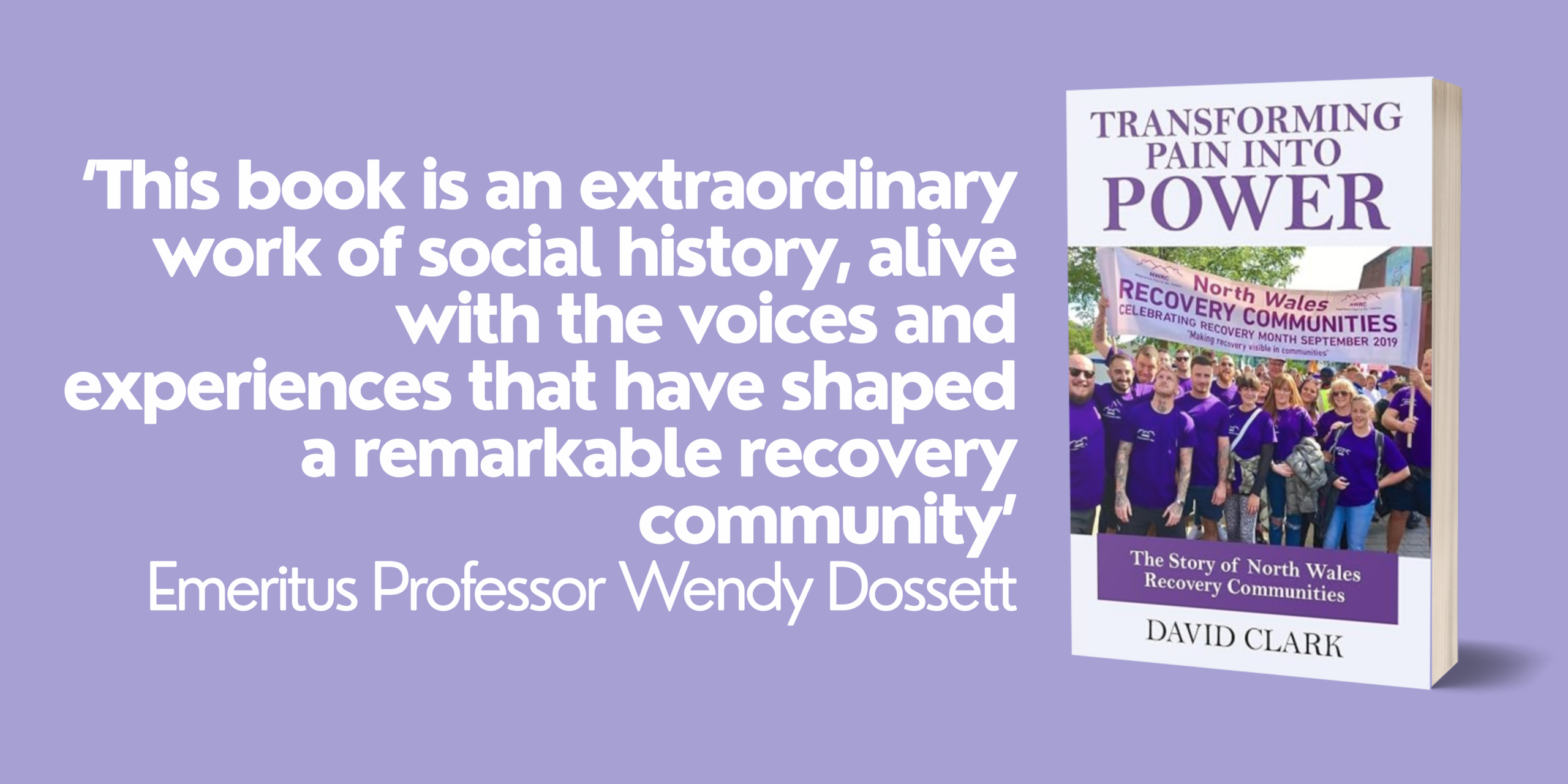
I love Bruce Perry’s words. They are so relevant to what underlies the success of NWRC in helping people on their journey to long-term recovery from addiction. This blog post is taken from my new book Transforming Pain Into Power: The Story of North Wales Recovery Communities (NRWC).