

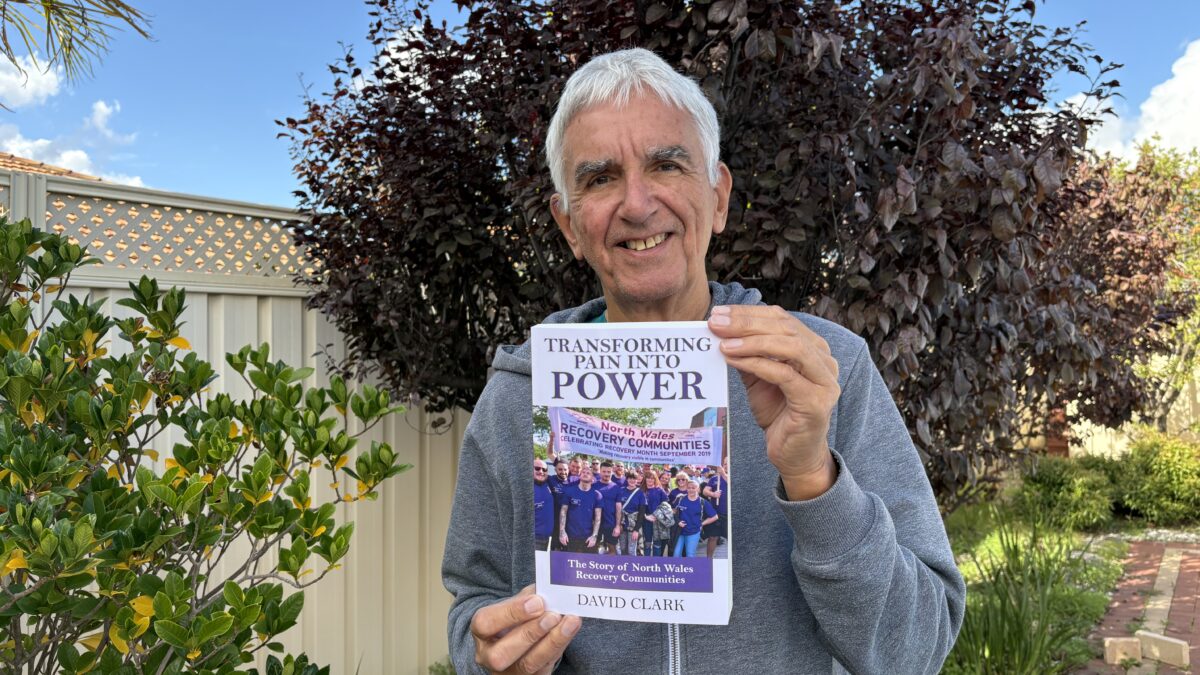
I thought it was time to remind people about my new book, Transforming Pain Into Power: The Story of North Wales Recovery Communities, which came out some months ago. Here is the first part of the Preface:
‘A major problem in society today is our disconnection, from one another, from our natural surroundings, and even from our own inner being. This disconnection results in us having a reduced ability to buffer the negative impact of trauma and other stressors, such as poverty, marginalisation, shaming, and social injustice. Our increased vulnerability to adversity is leading to the increases in anxiety, depression, and other psychological and physical health problems we are seeing in society today. More people are turning to illegal and legal (alcohol and prescription) drugs to alleviate their psychological pain, which is leading to an increased incidence of serious substance use problems.
Today, our psychological wellbeing is dominated by a biomedical model of mental health, and by systems and institutions that focus on people’s deficits and weaknesses. Current systems of care also focus on addressing symptoms, rather than addressing the underlying causes of the problem, generally by prescribing psychoactive drugs. Despite the myriad of such drugs on the market, many of which cause side-effects, often serious, the number of people suffering from mental health conditions is increasing. If drugs are so good, why are these numbers increasing?
I have been saddened over many years by the poor practices which often occur within ‘official’ systems of care in the mental health and addiction treatment fields, practices that often cause more harm (sometimes traumatising people) than good, lead to disempowerment, disenchantment, and disengagement among citizens, and increasing levels of dismay and burnout amongst practitioners. Current systems of care are generally resistant to change, which is ironic when they expect their ‘clients’ to change and often blame them or their brain ‘disorder’ when their treatment does not work. Of course, good things also happen in these treatment systems, but this is nowhere near as common as it should be.
Healing or recovery from adversity comes from the person—it is active self-healing. Treatment practitioners do not make people better. Professional treatment or engagement in mutual aid or other support groups may facilitate recovery, but they do so by catalysing and supporting natural processes of healing in the individual. Family, friends, and others do the same in helping someone overcome adversity. It is important to realise that relationships and community are key to healing. Empowerment and connection are essential for recovery and healing: ‘I alone can do it, but I can’t do it alone.’
I believe strongly that we need to develop grassroots initiatives that inform and inspire local communities to adopt a new approach to help improve the social and emotional well-being, and physical health, of individuals, families, and communities. No ‘white knight’ at a political level is going to come along and address the problems our society faces and has faced for some time. Many people who have come through adversity, recovering from mental health problems, addiction and/or trauma, have a special understanding of the healing process through their personal experiences. However, rather than being seen as a societal asset, they are ignored by much of the world of so-called professionals, in part due to the protection of vested interests. Many are stigmatised by members of the general public, despite overcoming their problem and often going on to help other people.
Recovery from addiction is the experience through which individuals impacted upon by severe alcohol and other drug (AOD) problems utilise internal and external resources to voluntarily resolve these problems, heal the wounds inflicted by AOD-related problems (and often treatment systems), actively manage their continued vulnerability to such problems, and develop a healthy, productive, and meaningful life. Recovery is a process that generally takes a long period of time and requires sustained effort.
Although formal treatment may help people, recovery occurs in the community, not in the clinic. Addiction treatment systems are also limited by the fact that they are only in a person’s life for a relatively short period of time. The much-heard phrase from those still doing alcohol or other drugs, or those in recovery, is particularly pertinent: ‘It is easier to get off than it is to stay off.’ Most people with a serious substance use problem relapse after leaving professional treatment, because they have no continued support in their community. Sadly, many treatment services do not even connect people to mutual aid or other support groups to help facilitate long-term recovery.
Peer-led recovery communities like the one described in this book, North Wales Recovery Communities (NWRC), represent an important asset to help individuals, families, and whole communities tackle substance use and related problems, yet they are poorly supported by systems of care and funding sources. These communities do not focus on the deficits and weaknesses in an individual; they utilise a person’s strengths and assets. They empower people by providing hope, understanding, and a sense of belonging. They engage people in a variety of activities that can facilitate personal recovery.
Recovery communities like NWRC utilise the fact that humans and their brains are social creatures that thrive on positive relationships. The brain changes in response to what is going on in our environment in a natural way, rather than the unnatural and unhealthy way that prescription drugs act. These recovery communities shift the focus away from ‘What’s wrong with you?’ to asking, ‘What has happened to you?’ or ‘What is happening to you?’ They create a calming atmosphere that helps members regulate their brain’s stress response system, facilitating emotional, social, and cognitive functioning. They help members address problems that contributed to the initial development of their addiction. They can transform pain into power, and create a ripple effect of recovery, or healing, in communities.’
You can find the next part my Preface, Book Outline, here. You can purchase the book, which is published by New Generation Publishing, via Amazon or major bookshops. Please tell your friends and work colleagues about the book. Thanks.