

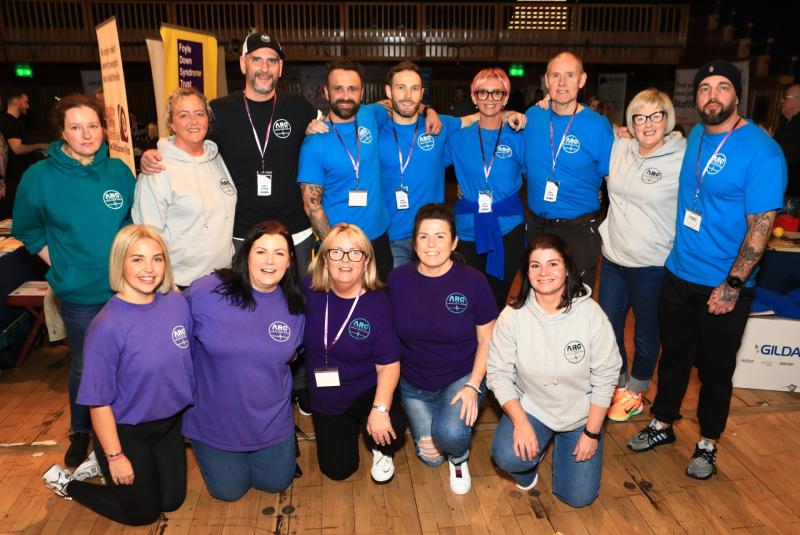
As some of you will know I had the most amazing visit to ARC Fitness, a wonderful recovery community based in a gym in Derry/Londonderry, in May last year. I’m really excited that In recently arranged for my partner Linda and I to visit there in late September this year. We will be there for the Recovery Walk on Saturday, 27th May, which will be very special… as will seeing old friends again. I’m feeling emotional thinking about it.
ARC Fitness was founded by Gary Rutherford, who my colleague Wulf Livingston interviewed early last year. Giving my book writing over the past months, I haven’t posted enough on my blog about ARC Fitness recently. A post is long overdue. As I have just back from a spin bike session in my local gym, I thought I should post the part of Gary and Wulf’s interview that focused on physical fitness, resilience, and recovery. Here is a summary of what was said in that part of the interview, as well as a link to the relevant film clip (6 mins 27 secs)..
…..
‘Healthy body means healthy mind,’ says Wulf. He runs mountains. ‘A bonkers pastime, but I can do, as there’s one outside my backdoor…’ He asks Gary, ‘What is it about the running, the gym, the physical activity? What is that unique connection with recovery?’
‘So, if you willingly engage in something that’s difficult and you do it enough times and you do it regularly, then you become resilient…. Take a really difficult workout, you know that you’re going to do it. And you know what? You didn’t die, you came out the other side. Then that translates to life. And that translates to recovery, because for me, recovery is just resilience in motion. That’s literally what it is. It’s every day, it’s getting stronger and stronger and stronger.’
Gary points out that when you are on a long run, by yourself in your head, there is a process of meditation in motion. If you’re involved in that, you’re not thinking about something else. For him, exercise allowed him to shift his perspective. His focus became less about having to stay sober, and more about something else. It became an identity shift for him.
Wulf points out that there is a sense of achievement and enhanced confidence as well. Gary says that it is so easy to measure progress in running. You ran a mile faster or a mile further. You can get really quick improvement measurements. If you need that at the beginning of a journey to keep you going, then you can see why people want to run. You can feel you’re making progress.
I guess running is a time-filler as well, says Wulf. Gary relates how when he first got sober, he was like Forrest Gump. Running twice a day, miles, and miles. Then he had to calm himself down. He points out that when you stop using, you are left with a lot of free time. You can use that free time constructively, reflecting and learning for example, or you can use it to ruminate. Ruminating is a very bad place to be. So, you need to have something that engages you in a positive manner. He emphasises that there is a big difference between reflection and rumination.
Wulf mentions various recovery communities that have different activities for engaging people. He believes that people in recovery need to be engaged in positive activities. Gary has seen some people who have gone down the fitness route and are in recovery who are insatiable in what they do. ‘I think when you’ve been through the chaos and the pain and the destruction, you have the ability to grind and do the hard work.’
Gary went to a running club and did the miles by himself. He loved that because ‘that was me in my head’. However, whenever he did strength training and CrossFit, it was community-focused. You did it in a group and everybody was in it together. In the ARC group sessions, when everybody does the same thing at the same time, people bond and there is camaraderie. And that community part is really important.
