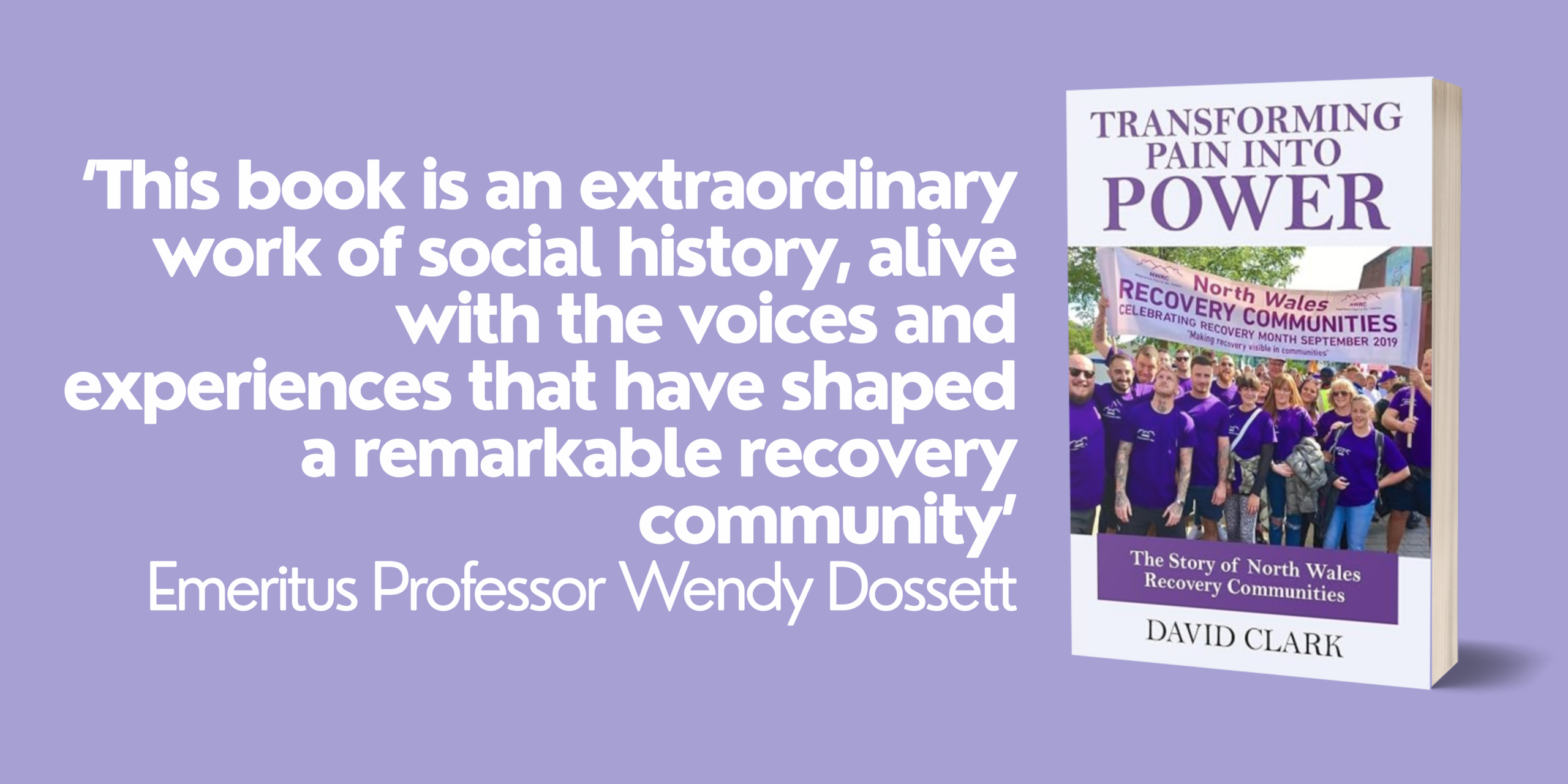
This week I’ll continue with some posts of sections from my new book Transforming Pain Into Power: The Story of North Wales Recovery Communities (NRWC) which focuses on this inspiring addiction recovery initiative based in Bangor, North Wales.
…..
When he started North Wales Recovery Communities (NWRC), James Deakin knew that he did not want to develop a formal organisation like a treatment service. He had some idea of how NWRC would be shaped and end up looking, but most importantly he knew it would grow organically, and in a way that he might not have predicted.
His initial challenge was to get some long-term recovery in the house, since NWRC started with only his personal recovery, and that process had started years ago and had not involved mutual aid. The NWRC community developed as more and more people found recovery, contributed their ideas and actions to what was going on in the house, and supported other people on their recovery journey.
‘You’ve got to approach this from a humble point of view, that you don’t know everything. That you’ve just got this idea for how it should be, but you’ve got to be prepared to adapt and switch with the demands of what the community wants, and everything that comes with it as well. And if you’re ever looking for inspiration or a realisation of how well life is, all you’ve got to do is look at some of these guys and look at where they’re up to, what they’re going through, and what they’ve been dealing with. And nine times out of ten, they’re doing it with a smile on their face as well.’
Early on in NWRC’s development, someone in a group turned to James and said, ‘This is the first time I have felt part of a family.’ James’s initial reaction was, ‘No, no, no! We’re not a family, we’ve got to have boundaries.’ Typical treatment service thinking! When he spoke to Wulf Livingston, the latter said to him, ‘Who are you to challenge that person’s reflection and feelings, and not allow him to embrace the idea of being part of a family?’
Reflecting on the matter, James realised that many people at NWRC have never felt part of anything, other than a using community. Now, he embraces the idea that he is part of a ‘weird, dysfunctional’ family, because the bonds created at NWRC are often stronger than those with members’ intimate partners, particularly if their partner is a ‘normie’. He often shares his thoughts with close community members that he would never share with his partner.
James provides an analogy of the situation at Penrhyn House by considering what occurs on an African plain when a lion is tracking its prey. It doesn’t attack an animal in the middle of a group, but one that looks weak and has lost touch with the main group. He stresses that the bonds created and strengthened at NWRC are often forged in adversity:
‘It sounds like a cliche, but we forge our bonds in adversity. We take these guys, and we tow them into really, really, deep water, so they’re like completely out on their own and thinking, “There’s no way I can do this.” The only way they can get back, the only way they can get through it, is by relying upon the support and the love and the encouragement of the people around them.’