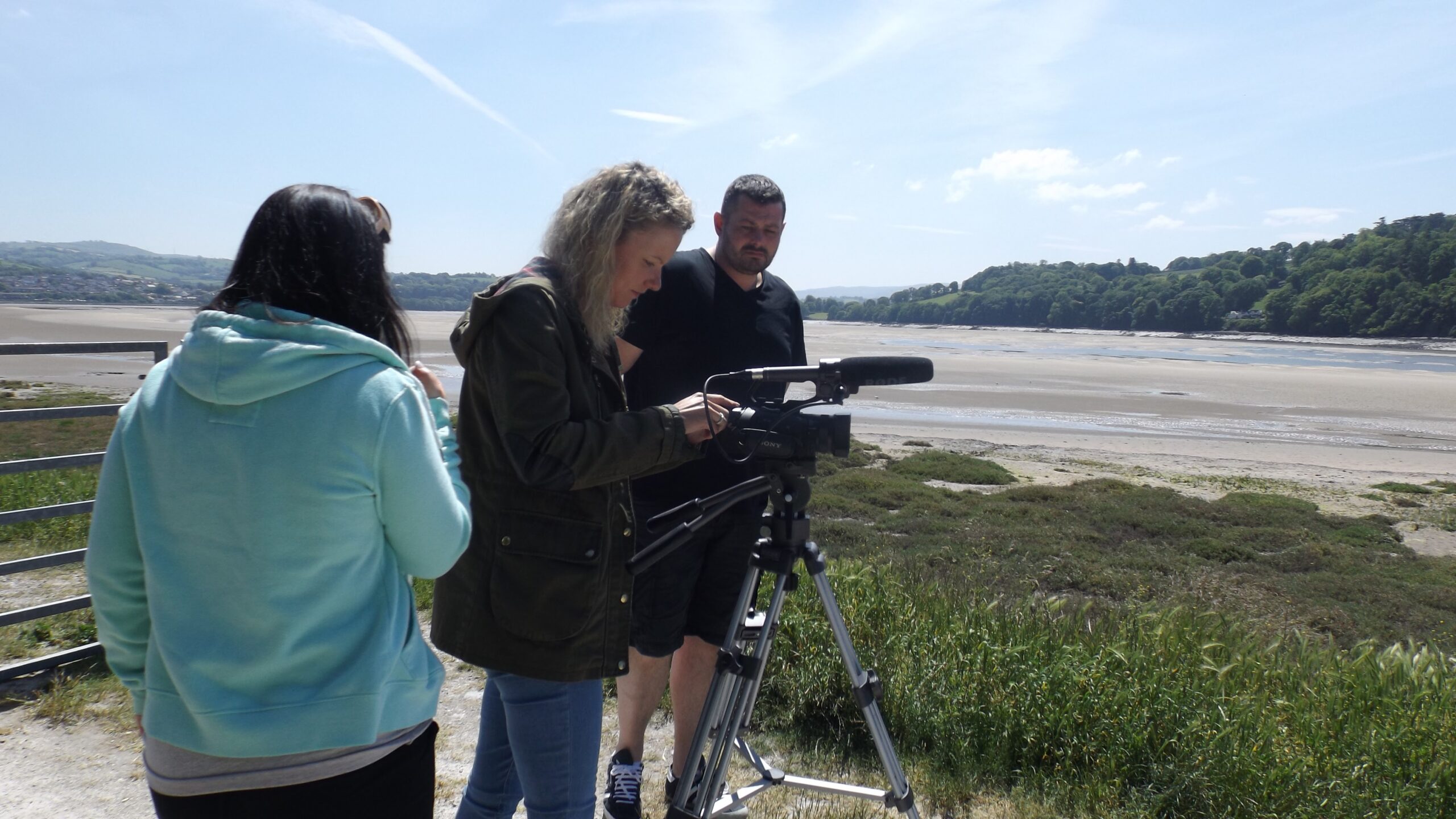
Here is the first part of a Story focused on a film that not only changed Marcus Fair’s life, and set him on an extraordinary journey, but also impacted on the lives of other people involved in the making of the film, and others who have been influenced by Marcus’s recovery initiative Eternal Media.
…..
‘I am here to tell you a story’, says Nick Devine at the beginning of Flipped it!. And so he does, the story of his heroin addiction and all that came along with that, as well as his inspiring recovery journey. In the first minutes of the film, we also meet our two other story-tellers, Lisa and Alan, both of whom had also journeyed out of a serious heroin addiction into long-term recovery. Those three introductions are mixed in with wonderful drone shots showing off the beauty of North Wales, accompanied by evocative music.
As I watched the film once again, I reminded myself that this awesome opening had been created by someone who had spent the previous 23 years addicted to heroin, along with long periods of homelessness and periodic visits to prison. I felt quite emotional.
As each of our storytellers talked about their life, we see photographs from their past. We also view black and white music videos which recreate episodes from Nick and Lisa’s lives.
‘I was born in Liverpool 47 years ago. I picked up chemicals when I was about eight or nine… older lads, mum’s valium, drink in the house. I was unruly. I was put in a private boarding school, so I had extra little chances just to try and take me away from the madness. But I felt out of sorts, different for want of a better word. I didn’t last there anyway. I won’t go into it, but something happened in the house when I was 14 and I was locked away on a Care Order. So I became a man in jail, in places that weren’t nice back then. There was no real protection for you.’ Nick
It was hard for Nick to sort out his life in the horrible places he was sent. He first tried heroin when he was 14, and took to it with a relish when he came out of prison. He became horribly addicted to the drug.
Nick explains that ‘through his life, one pain-in-the-backside officer, Alec Owen,’ an inspector with Merseyside police, never gave up on him. Whenever he was arrested, Alec turned up to see him, just wanting to help him. He kept saying, ’You’ve got to change. This isn’t you, lad.’ Nick emphasises that Alec really believed he could become the person he has since become, giving back to other people.
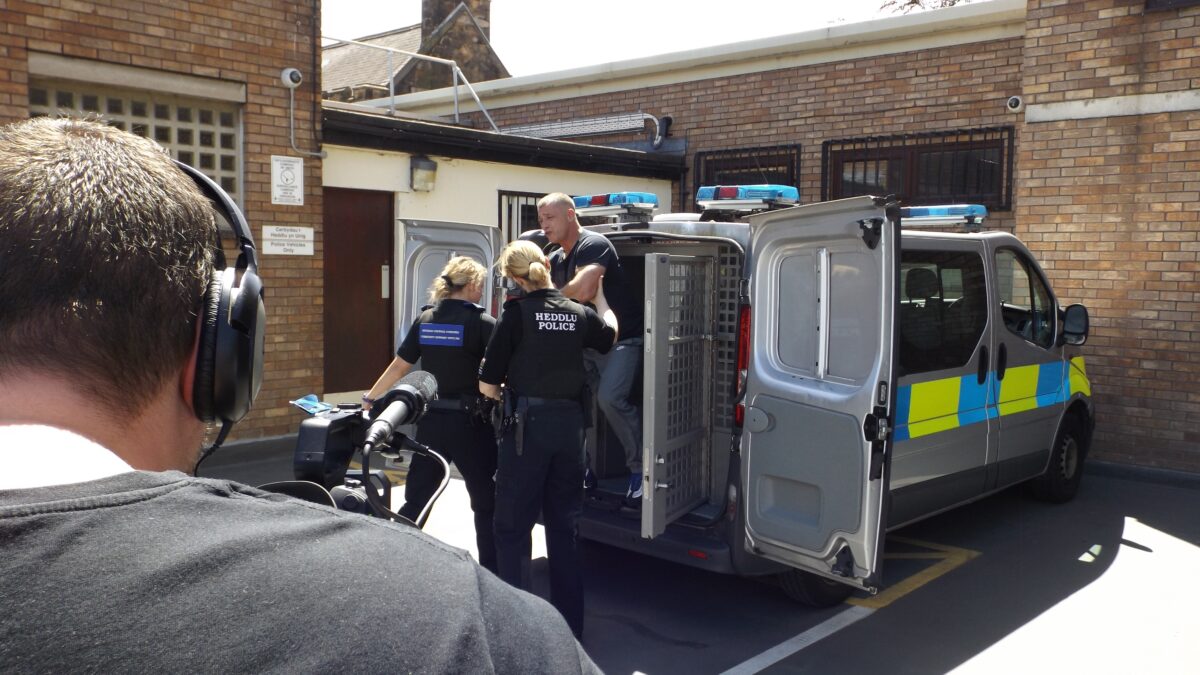
Marcus and his crew created a black and white music video within Flipped It!, with Jonathon Nixon performing his song ‘Melancholy’, as a young and older Nick keep getting taken from a police vehicle to a cell, where an actor playing Alec Owen repeatedly turns up to see him.
Lisa was a one-woman crime wave. She was running out of super-markets with trolleys, grabbing handbags off the street, robbing old women, and doing sneak-thefts from posh houses, all to fund her heroin addiction. She ended up in prison many times. She also changed the way she funded her drug habit.
‘Crime had become my career, I’d say. It was a full-time job. You’d go to town in one set of an outfit, and I’d have to go in a charity shop, pinch a new outfit to get changed to get the cameras off me. And then when they’d got on me, I’d have to go and pinch another outfit. It was really hard work….
So when this drug-dealing come along actually, it kind of saved me a little bit, because I didn’t like stealing off people. I didn’t kind of mind drug-dealing. Believe me, if anyone sold my daughter drugs today I’d mind it!’ Lisa
Lisa was then arrested, and found to have packets of drugs in her bra and knickers. ‘And it was in the paper. If you google my name, I’m in the paper for stashing drugs in my underwear. It’s blinking embarrassing!’ Lisa was sentenced to two and a half years in prison in September 2011, where her recovery journey began.
Alan used to finance his heroin habit through crime. He says that homelessness was the main problem in his life. He lived under the railway arches at Salford train station for three years. He also lived in multi-storey car parks, but as long as he had his drugs he didn’t really care where he slept. Three years after stopping using, he was still periodically dreaming about taking heroin. He would then feel ill when he woke up, as if he was experiencing drug withdrawal.
Alan describes how the drug services, homeless team and police had a top ten list of people on the street who they wanted to get sorted out. He was on that list for over ten years. The point at which Alan finally decided he needed to sort his life out was when his leg swelled up and he thought he was going to lose it. He knew several heroin addicts who had lost a leg and were still begging and injecting themselves in the groin whilst in wheelchairs on the streets.
When he was in rehab, Alan expressed an interest in nature, as he had always wanted to work with nature, and he had the opportunity to go on a bee-keeping course which he ‘snatched with both hands.’ After leaving rehab he linked up with the recovery organisation AGRO, where he had the opportunity to go on a further course.
He now had two colonies of bees and was planning to expand once he had obtained his driving license. He wanted to make cosmetics, candles, ‘nice stuff, basically.’ Alan was asked if this was his passion. ‘My way out,’ he replied. ‘Nature is my passion.’ Bee-keeping was something that was tangible, something he could do.
The film takes us out into the country where Alan, dressed in full protective clothing and obviously in his element, helps one of the police officers who was seconded to the film crew dress into the same gear. He then shows her various aspects relating to his bee-keeping practices while thousands of bees buzz around and a beautiful song plays in the background. The film portrays beautiful moments. What a difference seeing a really healthy-looking Alan in his element in nature, compared to the photographs we see from his earlier life.
My Path to Heroin Addiction: Marcus Fair MBE Story, Part 1