

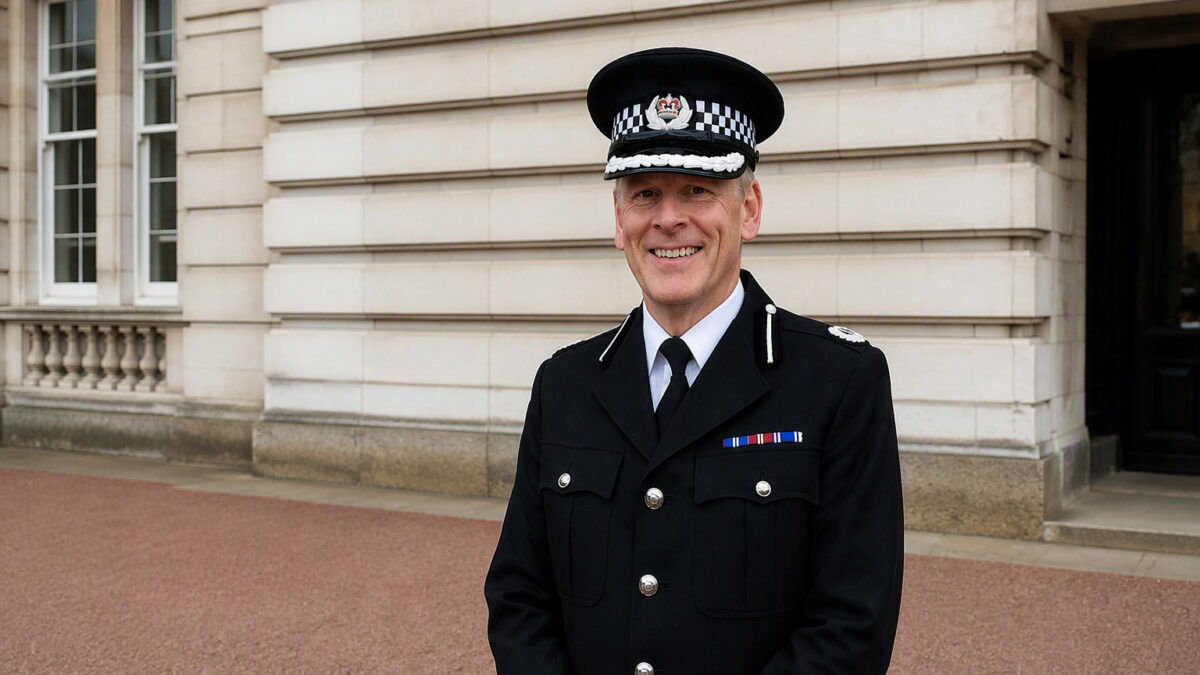
In late June, I started to tell the story of Marcus Fair, Founder of Eternal Media, who battled a heroin and crack cocaine addiction of 25 years, along with periods of homelessness and incarceration, before receiving an MBE in this year’s New Years Honours. The Award was made for Marcus’s services to Addiction Recovery, Tackling Homelessness, and to Ex-offenders. I wrote three other blogs posts relating to Marcus’s life leading to his time in Open Minds Rehab in Wrexham in 2014, the beginning of Marcus’s long-term recovery.
In the next series of blog posts relating to Marcus, I’m going to take the reader on a journey into his making of the highly acclaimed film ‘Flipped It!’. This film was initially commissioned by former North Wales Police Assistant Chief Constable Simon Shaw to help frontline officers better understand and signpost individuals struggling with addiction. The film’s cast consisted of people in recovery, while the crew included some police officers. An interesting combination!
Before taking you on this journey, I wanted to tell you Simon Shaw’s Story, constructed from an interviews I had with him, which has seen him become a true community champion, in particular in relation to the addiction recovery field.
…..
I joined South Yorkshire Police in 1986 and worked in a busy urban area of Sheffield. I dealt with a good deal of drink-related problems, particularly on a Friday and Saturday night, plus domestic violence and petty crimes. Drug-related crime was becoming an issue, but not a big problem.
When my future wife Alyson’s mother passed away, she wanted to move back to Chester to support her father and two teenage brothers. I couldn’t get a police job in Chester, but I was hired by North Wales Police and posted to an outstation in Bwlchgwyn, a village located in the hills outside Wrexham. It was the sort of place where if anything bad was going on in the village, the villagers came to me for help. I felt that I was having a positive impact and loved the job.
After three years, the outstation was closed as part of cutbacks and I was promoted and moved to Dolgellau, a small town located just south of Snowdonia. This was the sort of place where I might have to tell a few people who had drunk too much to go home after they had become a bit boisterous on a Friday night. Most would do so without argument, and for others, their friends would drag them home. The drug problem was limited to a lad coming home from college in Wrexham with some cannabis. Everyone knew, so I went around and took the drug off him. Again, I loved my job.
These two jobs played a significant role in informing my approach to community policing and being part of the community. I believe that policing can make a positive difference if it is embedded in what is going on in the community, rather than being shipped in to deal with a problem.
Lots of things have happened over the years that have changed policing style from what it once was, particularly technology (everything now electronic), austerity (resources being cut back), and a more American-like, military uniform. How a policeman looks now has helped create a barrier to community engagement. I understand the desire to provide more and more protective clothing for the police, but at the same time the focus on health and safety, rather than reassurance to members of the public, has led to further disengagement of the police from the wider community they serve.
In 2000, I was a sergeant and seconded to the North Wales Drug and Alcohol Forum. This forum was a partnership of the statutory and voluntary sector agencies in North Wales that strived to work together to reduce the harm caused by drug and alcohol use. I was coordinator of the Forum, and my job was to ‘grease the wheels’ to ensure that the partnership had a clear strategy, and that effort and resources were focused on achieving the partnership’s shared goals. I had a small team working with me, including Anni Stonebridge. Her job was to evaluate the impact of the interventions/initiatives that the Forum implemented. Her work helped inform an evidenced-based approach to commissioning services for those in addiction and recovering from addiction.
The senior leaders of the agencies that made up the Forum were committed to making it work, which made my job much easier. The success of the Forum contributed to the Welsh Government establishing regional Substance Misuse Area Planning Boards (APBs) across Wales in 2010. The APBs were tasked with planning, commissioning and performance managing of substance misuse services. Once established, the North Wales APB replaced the Forum.
I rose through the ranks so that by 2010 I was the Chief Superintendent responsible for policing delivered by the teams based in the police stations across North Wales. I had retained my commitment to the idea of strong partnership working, as I firmly believed that the police have an important role to play in tackling many of society’s problems. However, real joined-up thinking and joined-up service delivery was required, if a long-term sustainable change was to be made.
In the same year, I was deputy chair of the North Wales APB and chair of the North Wales APB Delivery Group. This group was tasked with turning the strategy and vision of the APB into action. The year 2010 also saw the start of the ‘austerity years’. Many of the agencies that comprised the APB were some of the first to see their funding cut.
In 2013, I took on the role of Assistant Chief Constable and was responsible for all operational policing for North Wales. My job was to reduce crime and deal effectively with the crime and disorder issues that existed. By this time, policing was faced with the need to reduce spending as part of the government-led austerity measures. I was tasked with developing and implementing initiatives that would help reduce the annual policing budget by £20m.
The reality of this was that the number of officers policing the streets had to be significantly reduced. This was a challenging time for me trying to deal with two things that were competing with each other, but I still loved my job. I pushed the partnership agenda harder, trying to get people and organisations to be more joined up, to help make our collective resources have a greater impact.
During many of my presentations to partnership leaders and others, I used only two slides. One was a slide of a patio with flagstones, all very neat, and the other slide was of crazy paving. I was trying to make the point that as agencies shrunk back to their core services during austerity, the gaps between the agencies got bigger. And as the gaps got bigger, more people fell through them. The people who were falling through those gaps were often the most vulnerable, the most disadvantaged, the ones with more complex problems. And that meant more policing problems overall.
By letting people fall through cracks to save money today, we were just creating more problems down the road. And that is what happened. Today, we are still picking up the pieces and paying the price for the austerity years. Think about all those hospitals and schools that are also still affected today.
At the time, I was heavily involved in the work of the APB and membership of the group had expanded to include service user representation. One of those representing service users was Tony Ormond. Despite my not being able to understand some of the things that he talked about, such as the concept of recovery capital, Tony had a big impact on me personally. He had an interesting personal story and was very passionate about what he was trying to do. He invited me to a number of gatherings, including an AA meeting, where people told their stories.
I discovered then the power of storytelling. If you want to change people’s opinions, then you’ve got to get them to listen to a story. You can show them charts and graphs and make a solid business case, but it’s not going to have the same impact as creating an emotional buy-in through them listening to a story from someone with whom they can relate. I realised that people who were in recovery were a great resource that society should be tapping into and using, particularly as they really want to make a difference and help other people get out of the chaos of addiction and crime.
I started to develop initiatives which aimed to signpost people from prison cells to treatment services. I also wanted to get people in recovery to come and meet people in their prison cells, and tell them that their life can be very much better. Recovery is possible.